Welcome to Illinois State Senator Michael Hastings' Legislative Website
Hastings offers recognition to South Suburban Illinois State Scholars
- Details
- Category: Press Releases
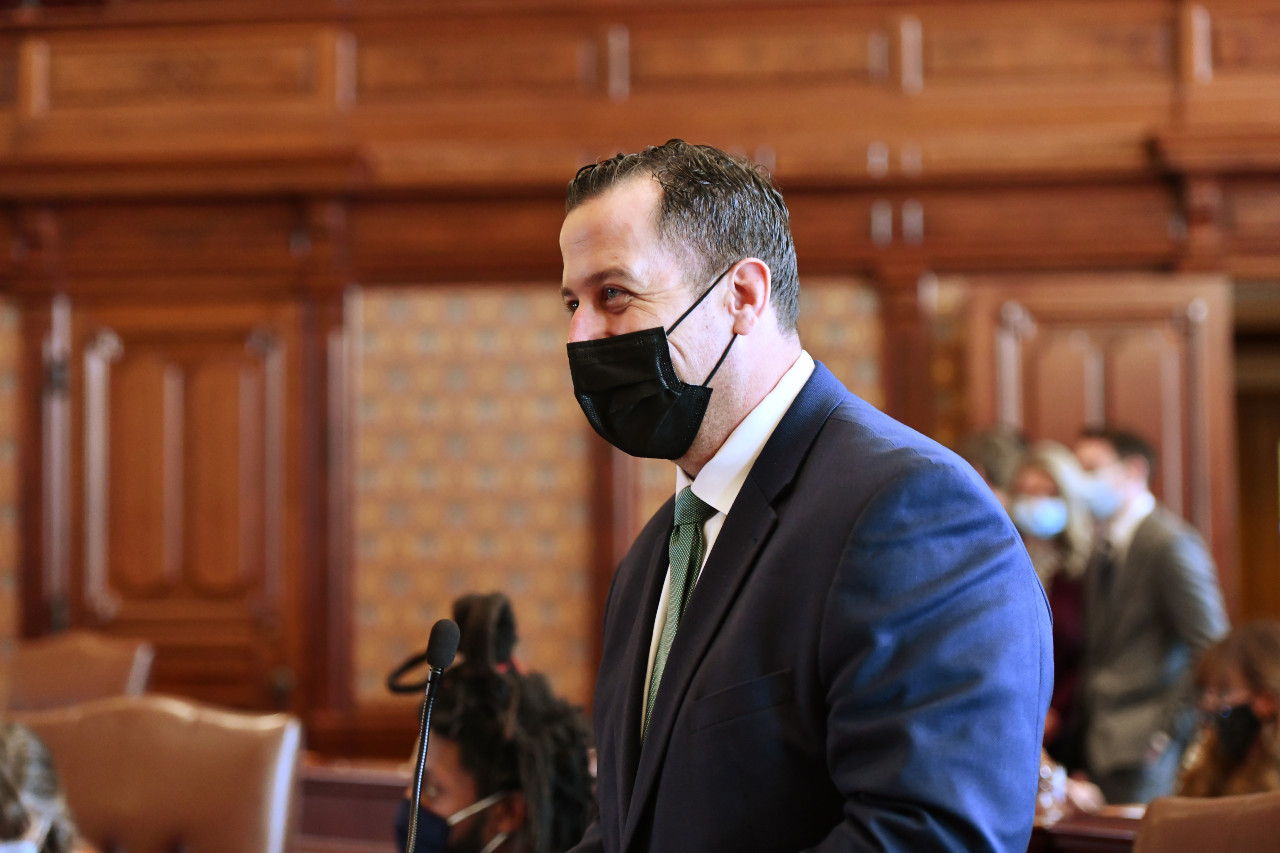
SPRINGFIELD – State Senator Michael E. Hastings offered congratulations to over 400 South Suburban high school students who were named 2021-22 Illinois State Scholars by the Illinois Student Assistance Commission.
“Those who excel in the classroom in high school set themselves up well for a lifetime of success,” Hastings said. “These remarkable young people always deserve recognition for their hard work – but even more so as they persevered to emerge from a global pandemic as one of our state’s brightest.”
Illinois State Scholar winners rank in approximately the top 10% of the state’s high school seniors from 676 high schools in all 102 counties. Selection is based on a combination of standardized test scores and class rank or unweighted GPA at the end of the student’s junior year. ISAC works in conjunction with the students’ high school guidance counselors to determine the winners.
Scholars from the South Suburbs include students from seven area high schools, including Hillcrest High School, Southland College Prep Charter High School, Tinley Park High School. Victor J. Andrew High School, Providence Catholic High School, Lincoln-Way Central High School and Lincoln-Way East High School.
“As an alumnus of Victor J. Andrew High School, I know firsthand how lucky South Suburban residents are to live in close proximity to quality institutions that give our kids the opportunity to better themselves every day,” Hastings said. “I wish nothing but the best for our scholars and look forward to following their future endeavors.”
Recipients of the award will receive a congratulatory letter from ISAC, and a Certificate of Achievement will be sent to their high school. State Scholars will also receive a digital badge issued by ISAC that can be displayed on online profiles, exhibited on social media, and shared with prospective colleges and employers.
More information about the State Scholar program can be found at ISAC’s website.
Hastings prioritizes the development of amateur athletes through proposed commission
- Details
- Category: Press Releases
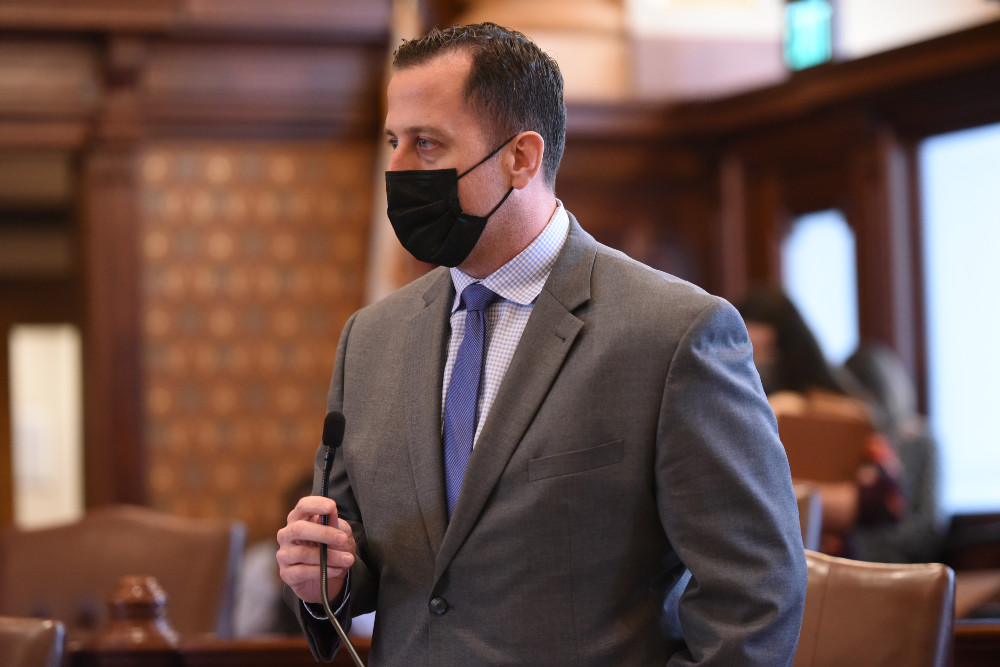
SPRINGFIELD - To reaffirm the state’s commitment to amateur athletics, State Senator Michael E. Hastings passed a measure through the Senate State Government Committee that creates the Illinois Amateur Sports Commission Act.
“Students throughout our state saw their athletic development stunted by the COVID-19 pandemic,” Hastings said. “This commission is simply one way we can begin the work of making up for that lost time, fostering a culture of athletic success and physical fitness for future generations.”
Senate Bill 1749 creates the Illinois Amateur Sports Commission, whose purpose is to research, study, and make recommendations to the governor and General Assembly about the promotion, development, expansion, and fostering of amateur sports throughout the state.
The recommendations by the commission will be focused on the promotion and encouragement of physical fitness through participation in amateur sports and amateur sports programs. Additionally, the development of local and statewide business opportunities and economic development relating to amateur sports, amateur sports programs, competitions, and events will be prioritized.
Minnesota has a similar organization, which has generated sports tourism revenue and played a key role in assembling a bid proposal for Minnesota to host the 2024 Olympic Swimming Trials, for which the state is currently a finalist.
“We have seen similar organizations find success in promoting participation in amateur sports on a statewide level,” Hastings said. “This is an opportunity to build on that success using our state-of-the-art facilities and resources in Illinois to create an environment in which young athletes can continue to learn valuable life skills.”
This legislation now awaits consideration before the full Senate.
Hastings’ plan to honor fallen National Guard troops passes Senate
- Details
- Category: Press Releases
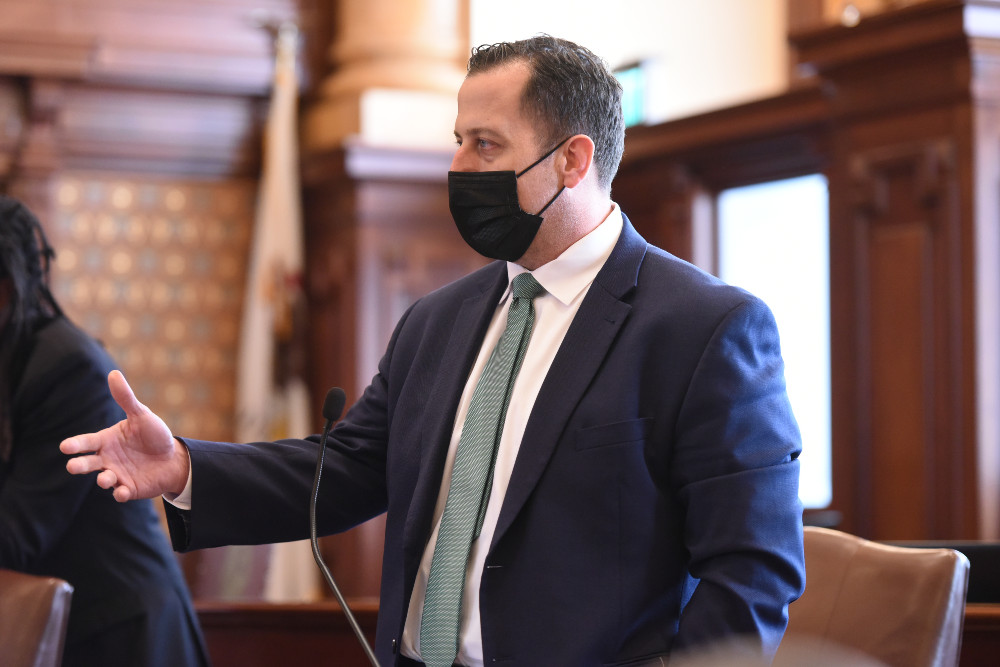
SPRINGFIELD – Members of the Illinois National Guard will be sufficiently honored in death thanks to a piece of legislation, sponsored by State Senator Michael E. Hastings, which passed the Senate earlier this week.
“The presentation of a flag, whether it’s a state flag or the American flag, to the families of fallen soldiers is a crucial tradition that dates back centuries,” Hastings said. “I am humbled by my colleagues’ approval on this measure, which will extend a time-honored privilege to our state’s fallen National Guardsmen and women.”
Under current law, members of the Illinois National Guard serving on federal duty or training status are to have a state flag presented to their next of kin upon their death, should they die while serving. Senate Bill 505 adds State Active Duty to this provision, ensuring that all who lose their lives in service of their state and country are properly memorialized.
“It is my hope that this gesture will ease some of the pain facing military families who have lost a loved one,” Hastings said.
This legislation now moves to the House for further consideration.
Hastings measure giving airline employees sick time flexibility passes Senate
- Details
- Category: Press Releases
SPRINGFIELD – State Senator Michael E. Hastings (D-Frankfort) passed legislation through the Senate Wednesday that would allow airline employees to use earned sick time to care for loved ones.
“Forcing hard-working individuals to make a choice between their livelihood and their family is morally bankrupt,” Hastings said. “Numerous corporations throughout America have figured this out, and it is time airlines follow suit.”
Hastings was inspired to lead the measure by two constituents, both who are flight attendants for Southwest Airlines. Corliss King’s husband was diagnosed with end-stage renal disease in 2017 and was hospitalized several times, receiving various surgeries that left him in need of care at home. Corliss was able to use her own accrued sick time to help care for her husband and children until 2017 when a law was passed that removed coverage for airline employees.
Susan Lyons has a similar story. When her brother, a single father, suffered a heart attack, was pronounced dead, and revived but in a stable coma, Susan was forced to take unpaid FMLA leave, rather than use any of the 300+ sick hours she had accrued on the job. She lost over a month of income during the time she was caring for her brother and his child.
Under Senate Bill 645, these airline employees would be able to use earned sick time to care for sick family members.
“Last night I had the privilege of watching the Illinois Senate vote in favor of the amended Sick Leave Act,” King said. “Having lost my husband in 2020, this bill means so much to me. Being able to use sick time to care for my ill husband would have meant being able to spend more time with him. I am thankful for Senator Hastings’ dedication to me, my family, and my coworkers throughout this fight and look forward to moving it through the House.”
This legislation will now be considered before the House.
More Articles …
Page 54 of 71
Welcome
Thank you for visiting my website. I am proud to serve as the State Senator from Illinois’ 19th District. I hope you will find this site a useful resource to stay informed about our district and my actions in Springfield. Please contact either of my offices with questions or ways I can better serve you.
It is my honor to represent you in Springfield.
Sincerely,

State Senator Michael Hastings
19th Senate District

eNewsletter
CONTACT SENATOR HASTINGS
Welcome to the official website of Senator Michael E. Hastings. Please fill out our contact form to contact Senator Hastings directly or you may call any of our offices. We look forward to hearing from you.
Springfield Office:
121-C Capitol Building
Springfield, IL 62706
(217) 782-9595
Frankfort Office:
20855 S. LaGrange Road
Frankfort, IL 60423
(815) 464-5431
East Office:
813 School Ave.
Matteson, IL 60443